


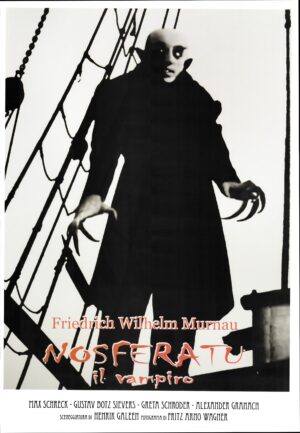
 Nosferatu – Italienisches Plakat, Eine Symphonie des Grauens (1922)
29,00 € incl. Vat, plus shipping
Availability: 10 in stock
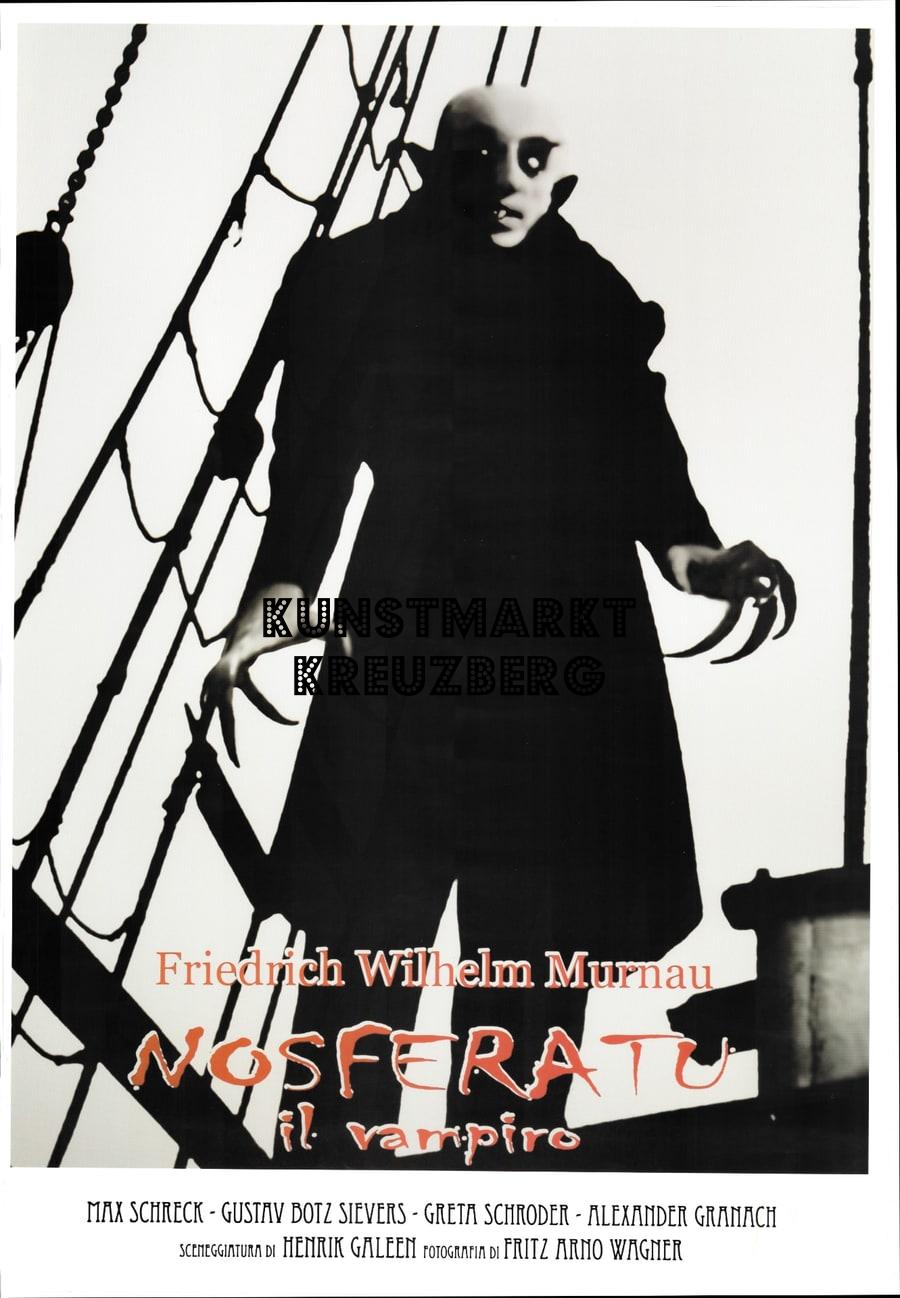
German Poster 70 cm * 100 cm
Availability: 10 in stock
Nosferatu is considered one of the most important silent films of German Expressionism and the first major milestone in horror cinema. In 1922, director Friedrich Wilhelm Murnau created a free adaptation of Bram Stoker's Dracula novel, which achieved worldwide fame despite legal conflicts with the author's heirs.
The plot tells the story of real estate agent Hutter, who travels to Transylvania to sell a house in the German port city of Wisborg to the mysterious Count Orlok. Hutter soon realizes that Orlok is a vampire who feeds on blood and poses a deadly threat to his fellow human beings.
The film became famous for its eerie portrayal of the vampire Max Schreck, whose ghostly appearance with a bald skull, long fingers, and piercing eyes still shapes the image of the classic film vampire today. The dark imagery, the use of light and shadow, and the expressionistic compositions make Nosferatu a masterpiece of film history.
Despite initial attempts to destroy all copies due to copyright disputes, the film survived and is now considered a cult classic that had a decisive influence on vampire films and continues to influence cinema and pop culture to this day.
| Category | Information |
|---|---|
| Film type | German horror film from 1922, dir: Friedrich Wilhelm Murnau |
| Size | 70 cm * 100 cm |
| Premiere | 4 March 1922 |
| Duration | 94 minutes |
| Direction | Friedrich Wilhelm Murnau |
| Production | Germany, Prana film |
| Language | German |
| Screenplay | Henrik Galeen - after Dracula by Bram Stoker |
| Camera | Fritz Arno Wagner, Günter Krampf |
| Music | Hans Erdmann |
| Cast | Max Schreck, Gustav von Wangenheim, Greta Schröder |
info@kunstmarkt-kreuzberg.com
+49 (0) 151 14325290
Oppelner Str. 48
10997 Berlin

© 2026 Kunstmarkt Kreuzberg
Nosferatu – Italienisches Plakat, Eine Symphonie des Grauens (1922)Availability: 10 in stock